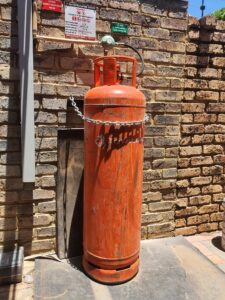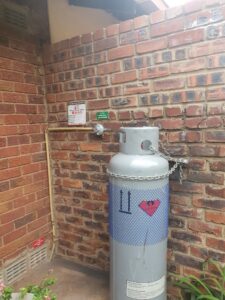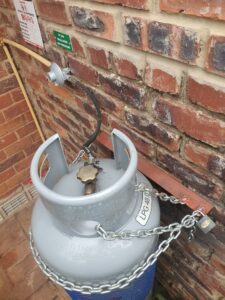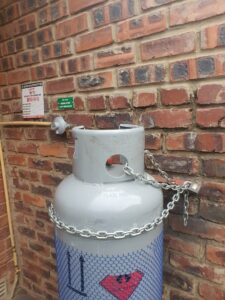
Do You Already Have An LP Gas Installation, But You Don't Know If It's Legal?
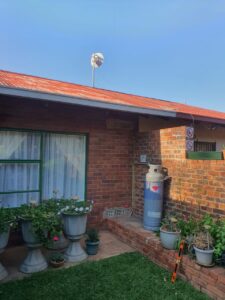
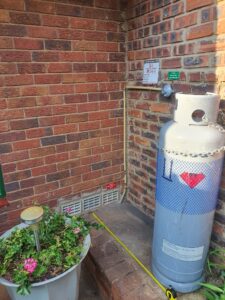
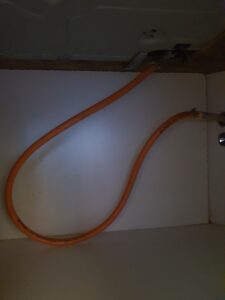
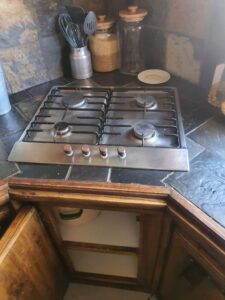
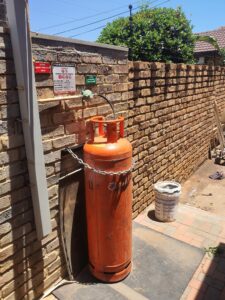
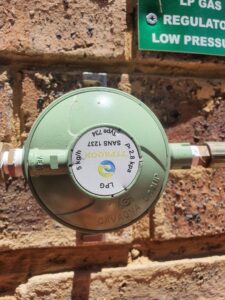
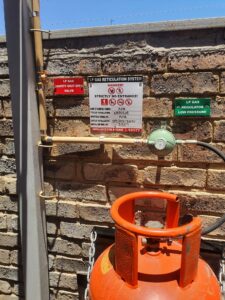
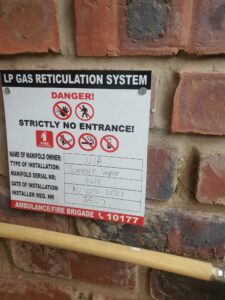
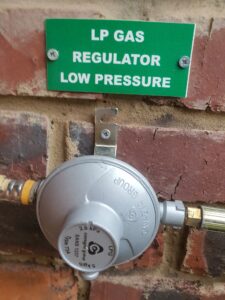
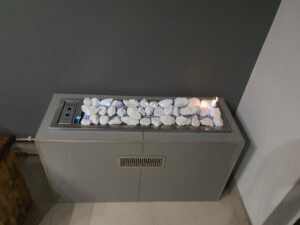
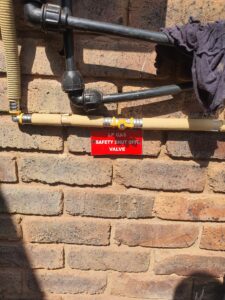
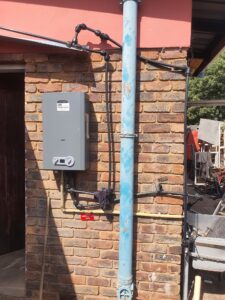
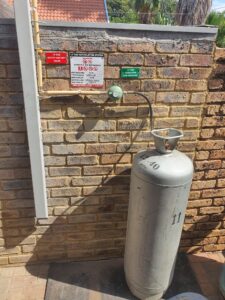
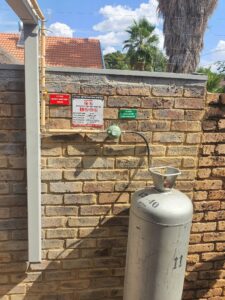
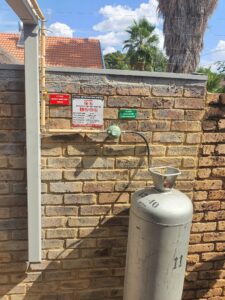
Compare It To The Following Diagrams Or Give Us A Call To Make Sure.
When it come to gas, there is no short cuts. We off complaint gas installation of domestic gas appliances in South Africa and surrounding areas.
Appliance Approval and Certification - South African National Standards (SANS) Code 1539.
Your safety is our priority and all workmanship and products are covered by a two (2) year warranty.

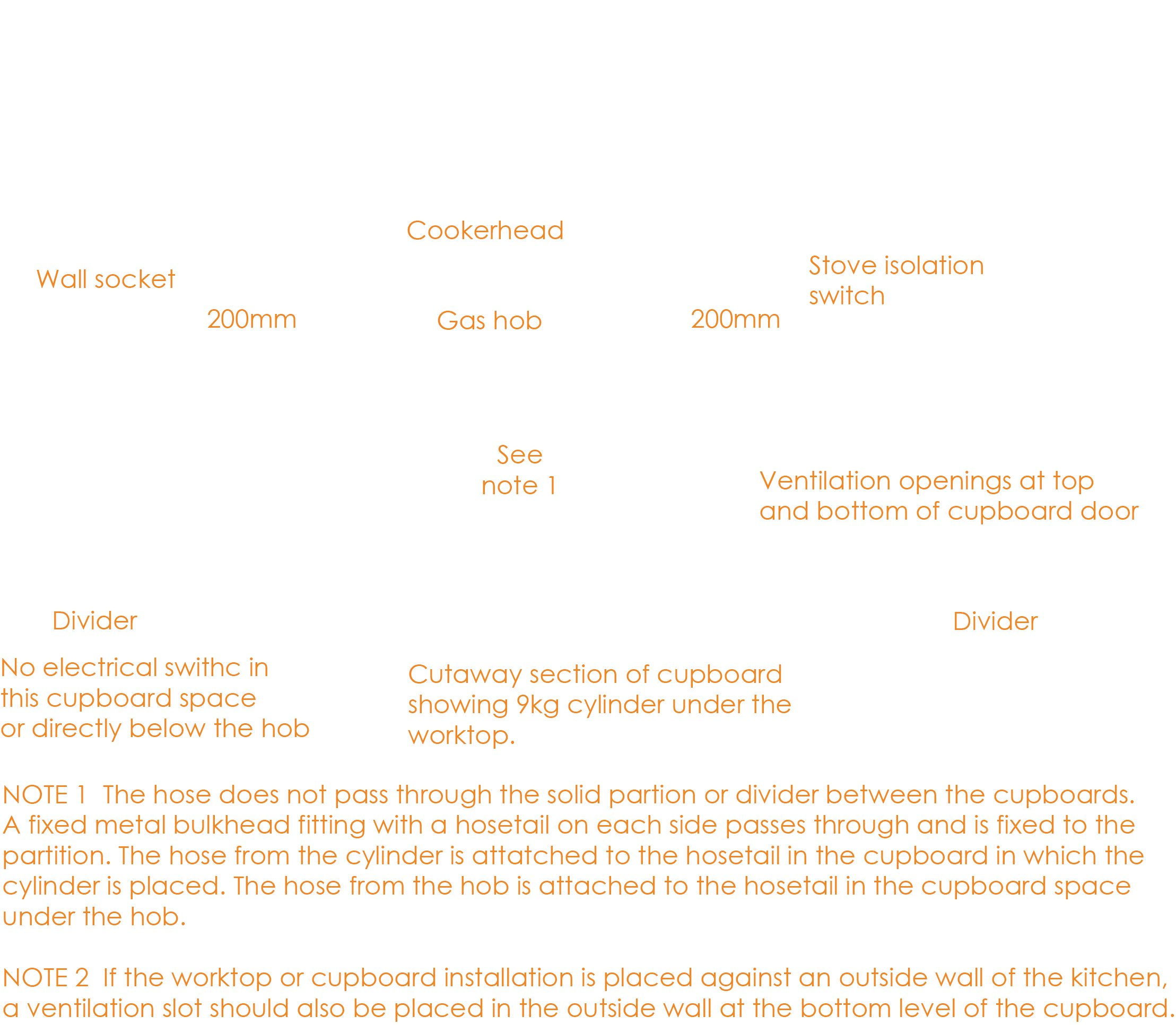
Outside Installation
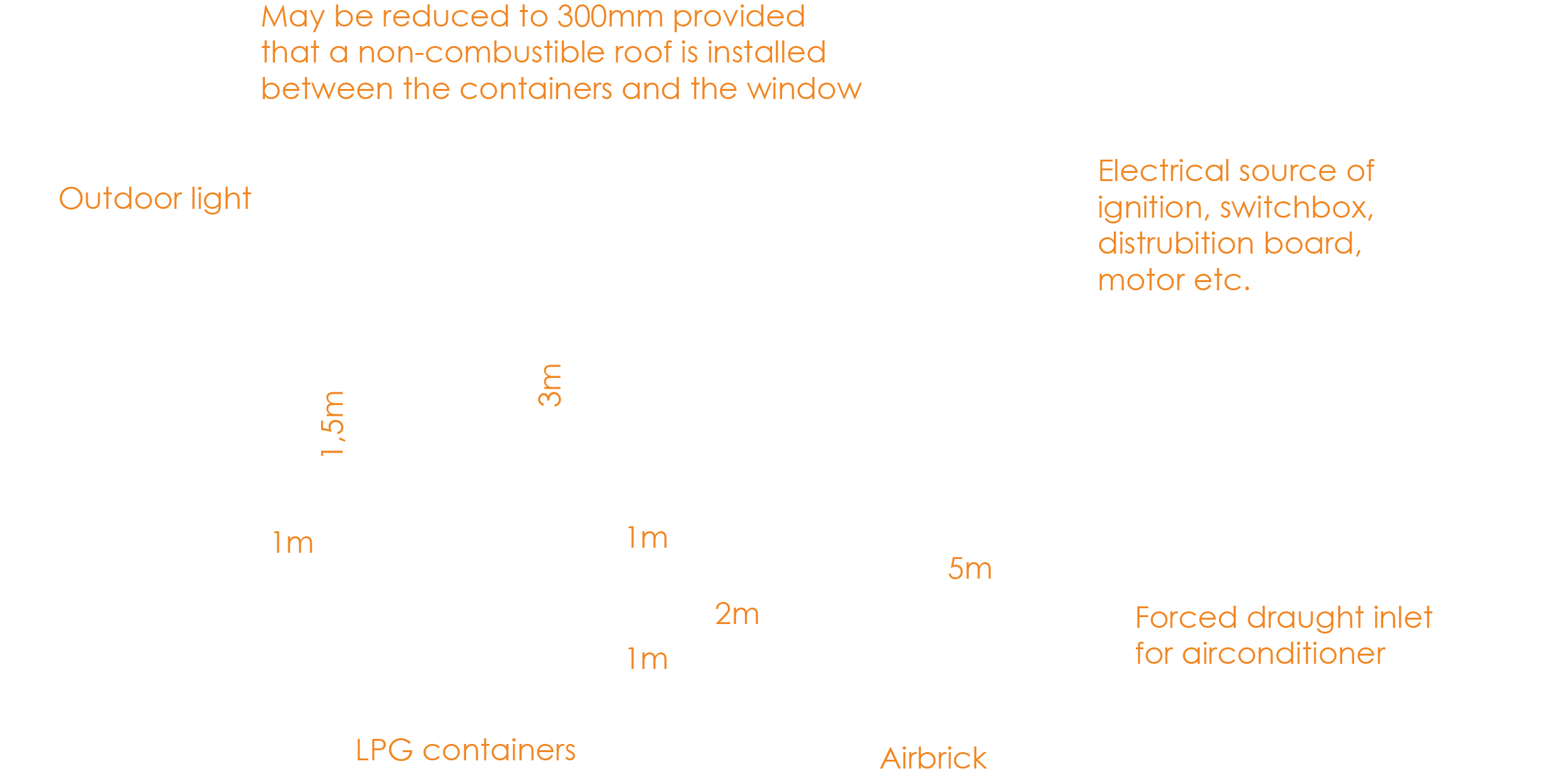
Inside Installation
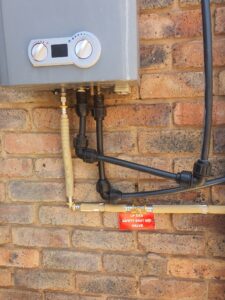
Water Heater Installation
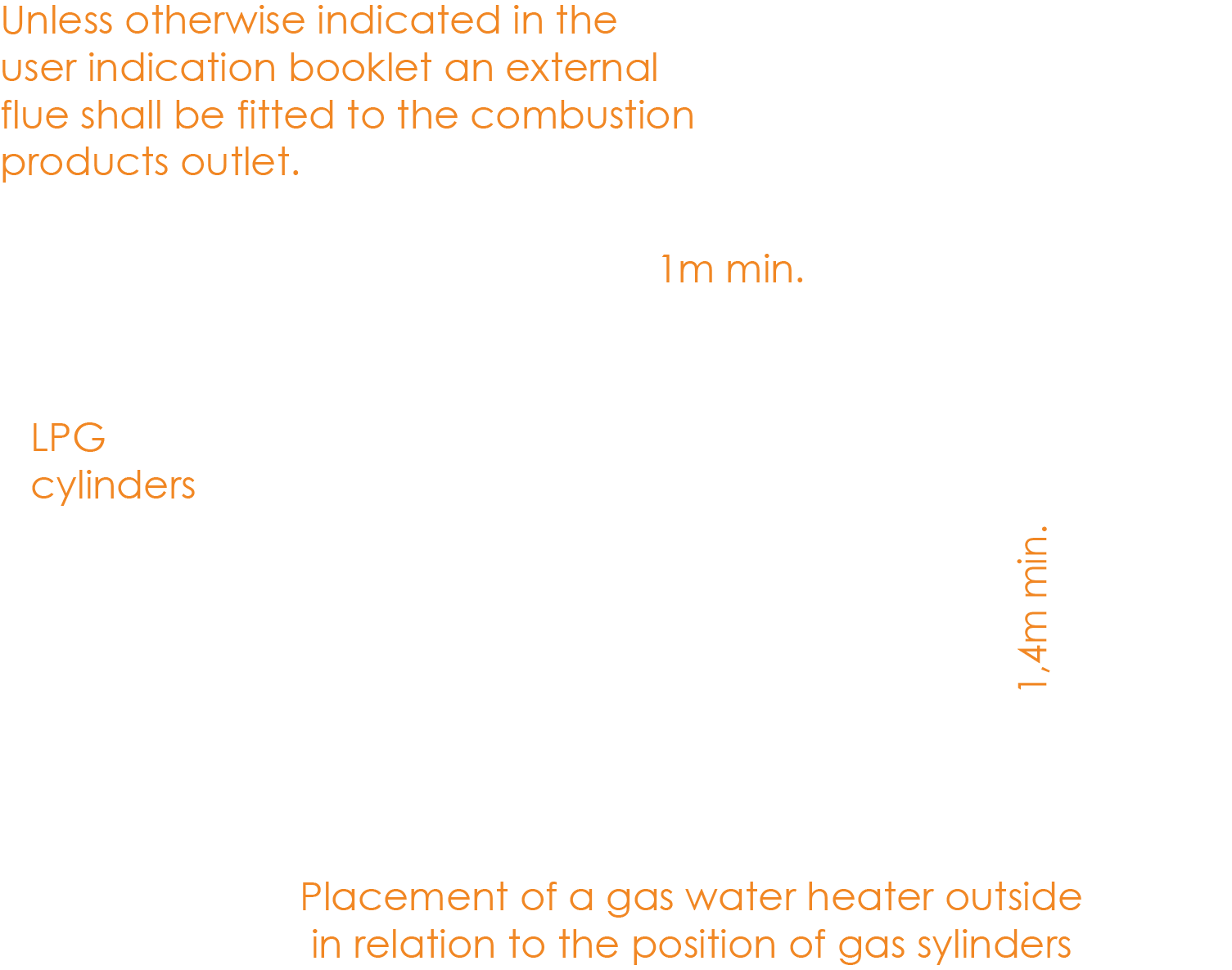
LPG placement specs for under a window
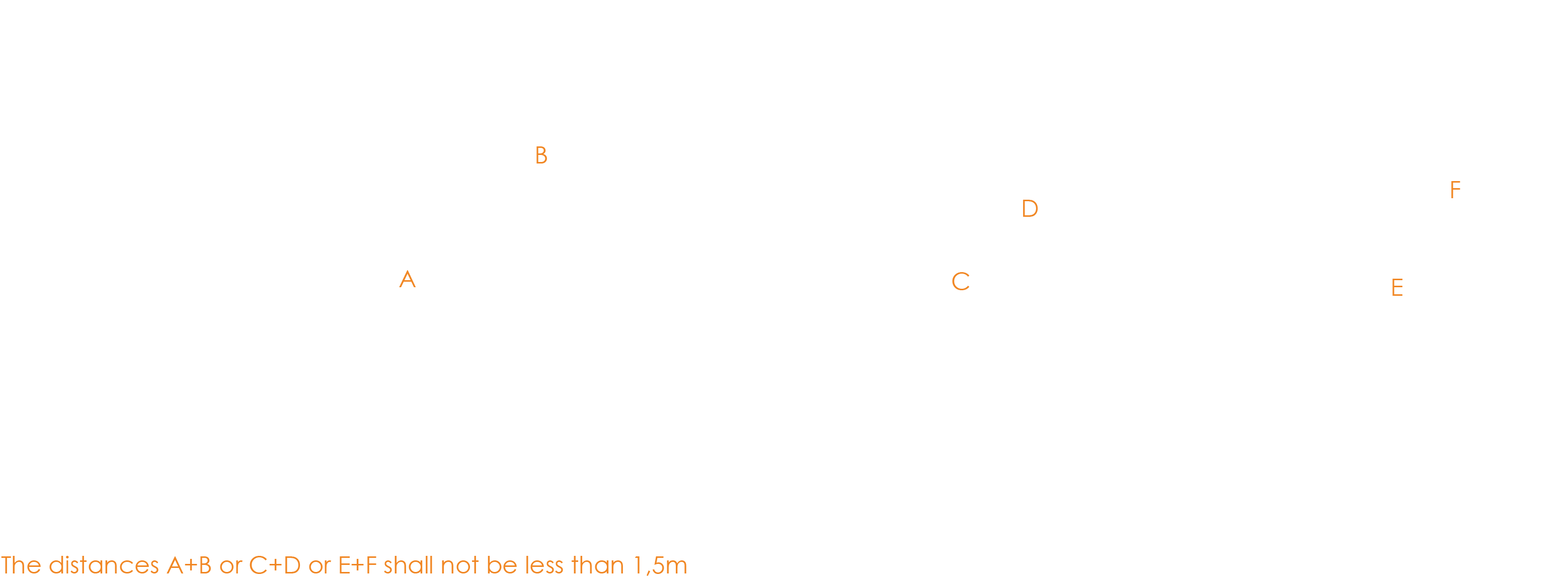
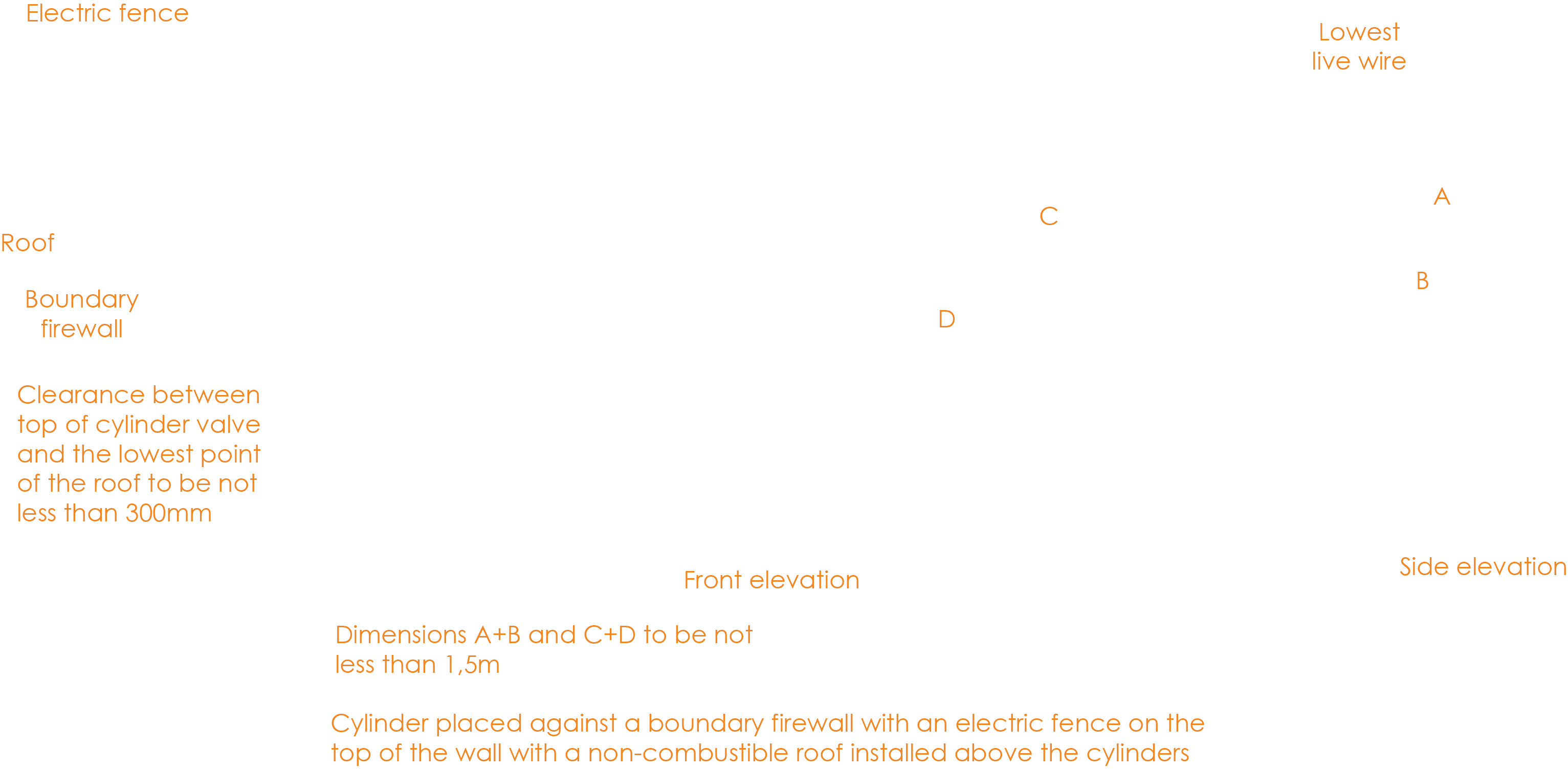
Cylinder placement specs for under electric fencing
Doors, Windows & Airbricks
- 1m away from any opening (into a building) that is below the level of the container valve, e. doors, windows and airbricks.
- 2m away from any drain, pit or manhole.
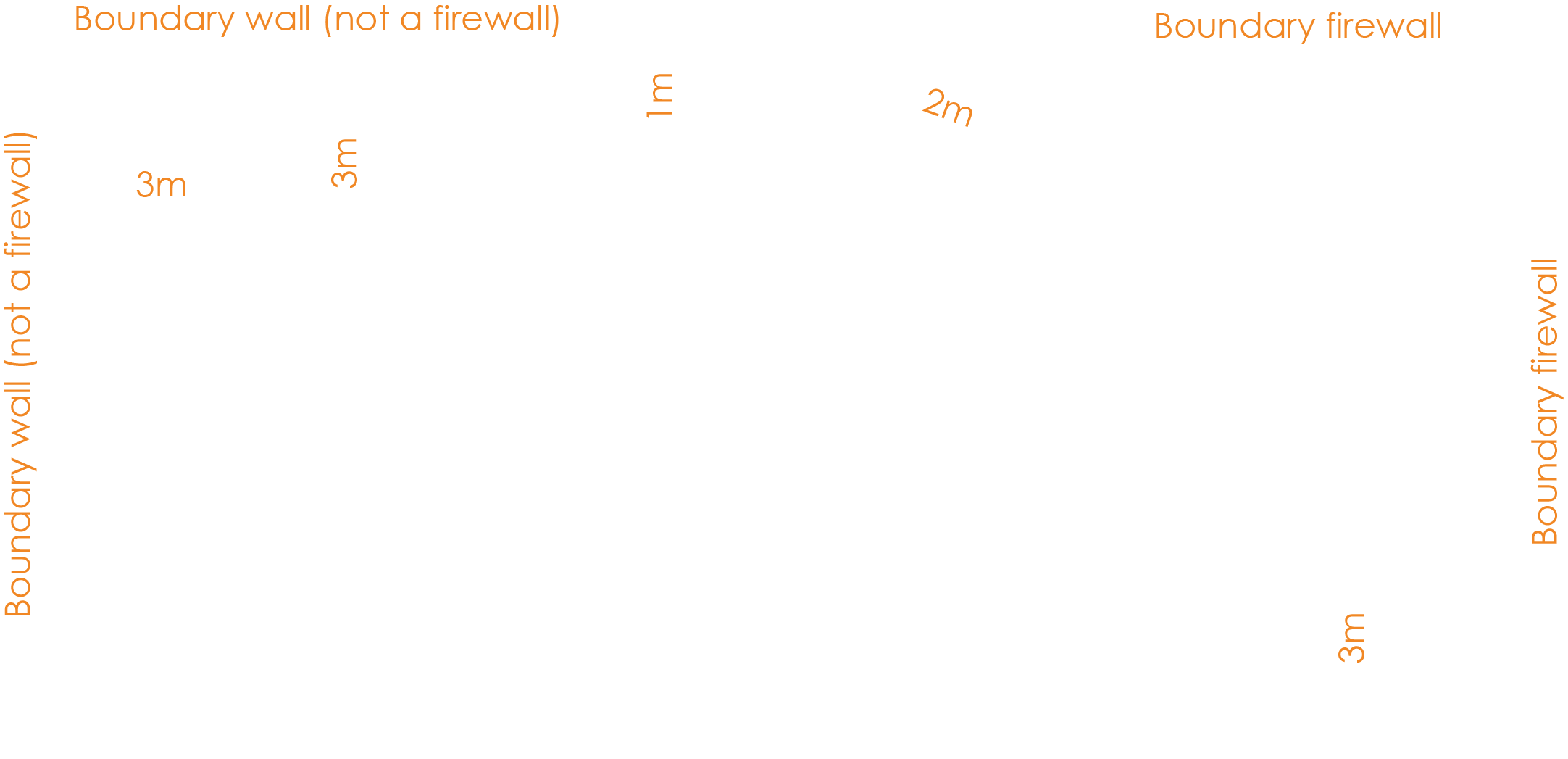
- 3m away from the property boundary, unless the boundary has a firewall, in which case the containers could be next to the firewall and where there are only two containers, the boundary distance can be reduced to 1m
- 3m away from any opening (or window) directly above the containers. The 3m distance from the top of the cylinder, valve connection or the manifold whichever is the higher, to the bottom of the window(s) may be reduced to a minimum of 300mm providing that.
Roofs
- A non-combustible roof (SANS 10400) is installed between the containers and the roof shall extend beyond the cylinder(s) such that when measured from the valve connection and around the roof to the nearest point of the window a minimum of 1,5m safety distance shall be obtained
- The window frames shall be steel and the total size of the glazing does not exceed 1m. Glazing shall be of wire woven glass not larger than 450mm x 450mm per pane. Such windows shall not be openable.
- Where a roof is installed over the cylinders there shall be sufficient space above the cylinder valves to facilitate the exchange of Roof structures of concrete shall not be installed above the manifold or cylinder.
Electrical Points
- 5m away from a switchable electrical point i..e. plug socket, Inline power isolator, Aircon units, Pool pumps, Water pumps etc. Not, a wall light only needs to be 1,5m to the left/right of the bottle, or 1,5m above the bottles.
Pipes/Sleeves
- If an installation consists of copper, only class 1 or 2 gas copper piping is to be used. The copper tubing is required to have markings showing the specs.
- Copper lines are required to be sleeved/protected if it's to enter through a wall, concrete or underground. This stops the copper from corroding.
- All Pex-Al-Pex manufactured to standards accepted for use on LP Gas installations must be sleeved if it is exposed constant Sunlight/UV
- In the even that a gas line is required to run in a roof where heat is impractical, it is compulsory to use only corrugated stainless steel gas pipe that is protected with no joins from entry to exit.
Shut Off Valve
- In a domestic installation, it is required to have a shut off valve/isolation valve for every appliance connected to the gas line.
- Flexible hose may not be more than 2m and may not go through any partition at all. This includes Wood, Dry walling, Concrete etc.
LPG Storage
- When LPG containers are permanently installed or stored in a building, the type of building (In accordance with SANS 10400-A, see also annex B) and the corresponding size of the container(s) shall be as follows:
- Flats: a maximum of 9kg flat
- Houses (including cluster housing and group housing (not exceeding two stories, a total of 19kg's per unit. - A total of 100kg's is allowed outside per a ERF/Stand number. If a property has more than 100kg's. The property will required approval from the fire department.
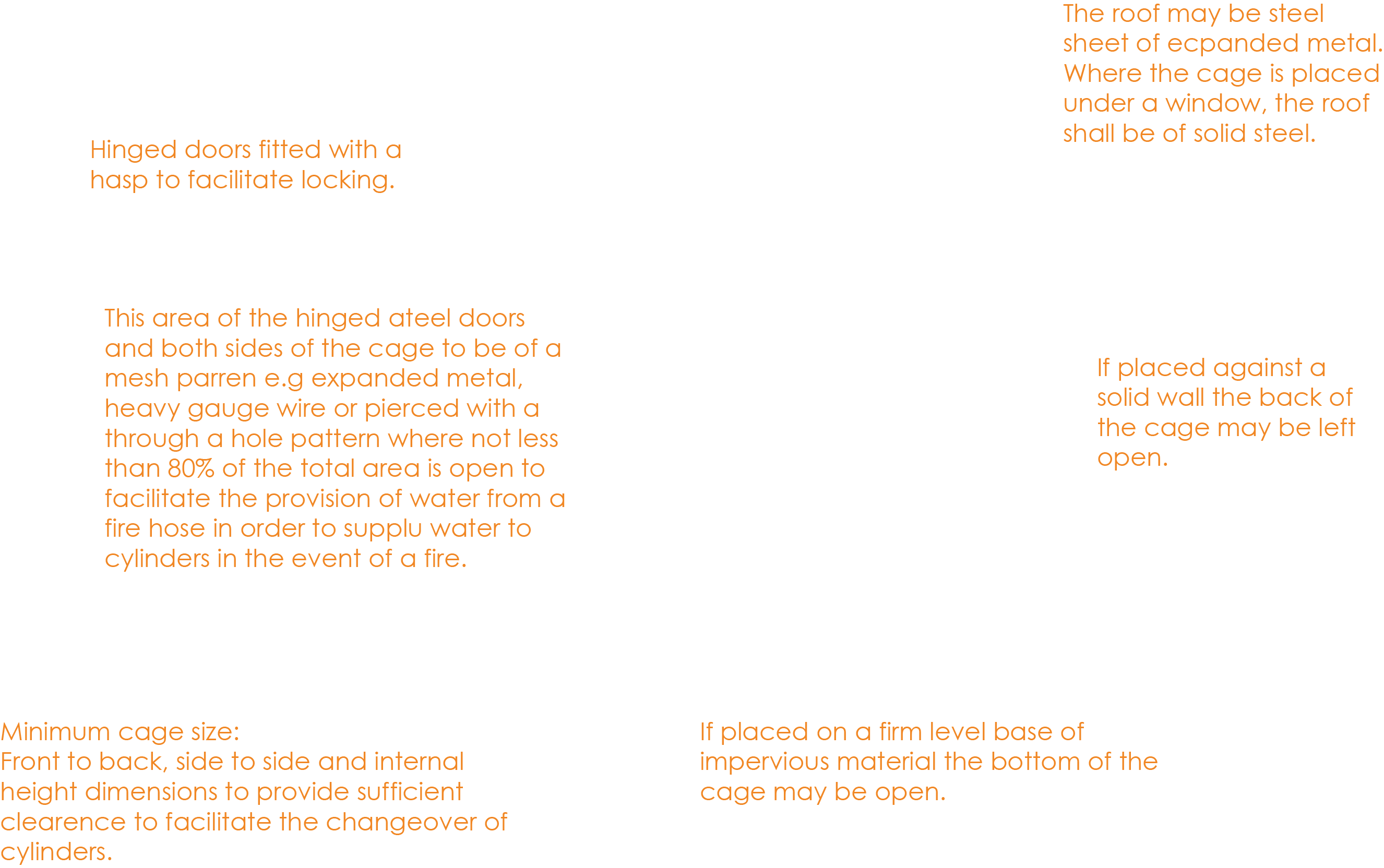
Domestic installations do not require that the cylinders be placed in a cage but shall be secured on a level concrete base in such a manner so as not to accidentally fall over. However where public access to the cylinders is possible, the cylinders and manifold, if fitted, shall be in a licked cage or fenced area that meets the requitements.
*Each gas installation/upgrade must be completed in accordance to the regulations of both the South African National Standard (SANS: 10087) and with the Liquefied Petroleum Gas Safety Association of South Africa (LPGSA) and SAQCC Gas.
According to the regulations SANS 10087-1:2013, All gas installations must have a Certificate of Conformity according to the Pressure Equipment Regulations that have been promulgated under the Occupation Health and Safety Act (No 85 of 1993).
While this may sound like a complex, legal document - essentially it is a certificate that states that the installation has been properly inspected and is determined to be safe and leak free. It is critical that this certificate is also issued by an authorized person who is registered with the Liquefied Petroleum Gas Safety Association of Southern Africa (LPGAS) and SAQCC Gas.
Cylinder distances required from a boundary
Cage Requirements
Outside Installation
Doors, Windows & Airbricks
- 1m away from any opening (into a building) that is below the level of the container valve, e. doors, windows and airbricks.
- 2m away from any drain, pit or manhole.
- 3m away from the property boundary, unless the boundary has a firewall, in which case the containers could be next to the firewall and where there are only two containers, the boundary distance can be reduced to 1m
- 3m away from any opening (or window) directly above the containers. The 3m distance from the top of the cylinder, valve connection or the manifold whichever is the higher, to the bottom of the window(s) may be reduced to a minimum of 300mm providing that.
Inside Installation
Roofs
- A non-combustible roof (SANS 10400) is installed between the containers and the roof shall extend beyond the cylinder(s) such that when measured from the valve connection and around the roof to the nearest point of the window a minimum of 1,5m safety distance shall be obtained
- The window frames shall be steel and the total size of the glazing does not exceed 1m. Glazing shall be of wire woven glass not larger than 450mm x 450mm per pane. Such windows shall not be openable.
- Where a roof is installed over the cylinders there shall be sufficient space above the cylinder valves to facilitate the exchange of Roof structures of concrete shall not be installed above the manifold or cylinder.
Water Heater Installation
Electrical Points
- 5m away from a switchable electrical point i..e. plug socket, Inline power isolator, Aircon units, Pool pumps, Water pumps etc. Not, a wall light only needs to be 1,5m to the left/right of the bottle, or 1,5m above the bottles.
LPG placement specs for under a window
Pipes/Sleeves
- If an installation consists of copper, only class 1 or 2 gas copper piping is to be used. The copper tubing is required to have markings showing the specs.
- Copper lines are required to be sleeved/protected if it's to enter through a wall, concrete or underground. This stops the copper from corroding.
- All Pex-Al-Pex manufactured to standards accepted for use on LP Gas installations must be sleeved if it is exposed constant Sunlight/UV
- In the even that a gas line is required to run in a roof where heat is impractical, it is compulsory to use only corrugated stainless steel gas pipe that is protected with no joins from entry to exit.
Cylinder placement specs for under electric fencing
Shut Off Valve
- In a domestic installation, it is required to have a shut off valve/isolation valve for every appliance connected to the gas line.
- Flexible hose may not be more than 2m and may not go through any partition at all. This includes Wood, Dry walling, Concrete etc.
Cylinder distances required from a boundary
LPG Storage
- When LPG containers are permanently installed or stored in a building, the type of building (In accordance with SANS 10400-A, see also annex B) and the corresponding size of the container(s) shall be as follows:
- Flats: a maximum of 9kg flat
- Houses (including cluster housing and group housing (not exceeding two stories, a total of 19kg's per unit. - A total of 100kg's is allowed outside per a ERF/Stand number. If a property has more than 100kg's. The property will required approval from the fire department.
Cage Requirements
Domestic installations do not require that the cylinders be placed in a cage but shall be secured on a level concrete base in such a manner so as not to accidentally fall over. However where public access to the cylinders is possible, the cylinders and manifold, if fitted, shall be in a licked cage or fenced area that meets the requitements.
*Each gas installation/upgrade must be completed in accordance to the regulations of both the South African National Standard (SANS: 10087) and with the Liquefied Petroleum Gas Safety Association of South Africa (LPGSA) and SAQCC Gas.
According to the regulations SANS 10087-1:2013, All gas installations must have a Certificate of Conformity according to the Pressure Equipment Regulations that have been promulgated under the Occupation Health and Safety Act (No 85 of 1993).
While this may sound like a complex, legal document - essentially it is a certificate that states that the installation has been properly inspected and is determined to be safe and leak free. It is critical that this certificate is also issued by an authorized person who is registered with the Liquefied Petroleum Gas Safety Association of Southern Africa (LPGAS) and SAQCC Gas.
Gallery